

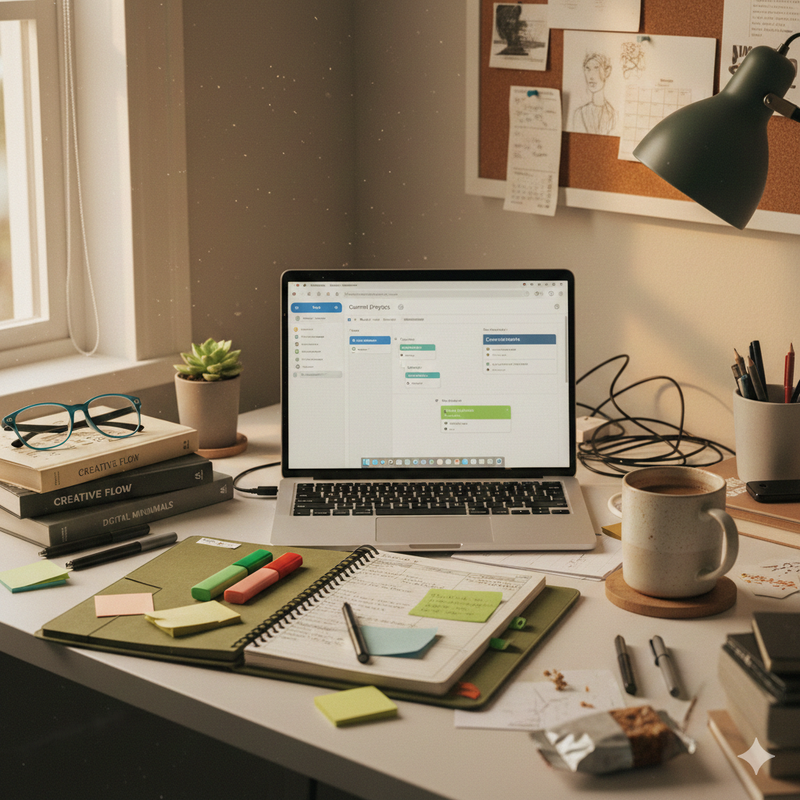
It’s that time of year again – planner time!
With all the options out there, how do you know which one to choose? Do you even need a reinvented method?
You don’t need a “perfect system.” You need a system that actually fits your life.
Let’s try to figure that out…
Keep It Simple, Stupid. (KISS)
Some people tend to overbuild: too many trackers, too many spreads, too much pressure.
Why?
Sometimes it can be fun, but eventually you’ll likely burn yourself out.
The real red flag: you’re not using it OR it feels like it’s going to explode. Literally.
Focus on minimalism over aesthetic chaos, or too much “quantified self” data that you’ll realistically never give a shit about (ie: 12 mood trackers, tracking water intake by color, etc.)
Focus on what you actually need.
What You Really Need to Plan For
Grab a piece of paper or your journal – it’s list time!
What do you feel the need to plan for in the first place?
Everyone has universal categories :
- Appointments & time-specific stuff
- Goals / Habits
What else? For me personally, I also need to plan for :
- Family adventures
- Homeschool
- Meal planning
Now ask yourself about each – Does this category make my life easier, or am I adding it because I feel like I should? Cross out the unnecessary & don’t worry about it!
The fewer categories you depend on, the longer the system lasts.
What To Do If Your System Feels Boring
Boring is fine. If it works, don’t fix it.
Consistency is boring. But boring is how you get results.
Overhaul cravings usually mean the current system never felt quite as effective as it needs to be. Ask yourself “why?”
Some small refresh ideas:
- Simplify back to only the essentials
- Switch up a layout
- Add minimal decoration, color, or a theme
- Reduce screens by intentionally using paper moments
Pre-Made Planner vs. Build-Your-Own
There are certainly benefits to both.
- Pre-made = great for beginners, busy people, and those who hate setup.
- DIY = great for people with unique schedules, neurodiverse brains, or flexible lifestyles.
Ask yourself : Do you want structure handed to you? Or do you want the freedom to build something more flexible?
Digital vs. Paper: Choosing Your Tools
Personally, I use both.
Notion strengths:
- Holds everything.
- Organizes long-term projects, archives, info-dumps, and complex systems.
- Perfect for the behind-the-scenes life management.
Paper strengths:
- Screen-free
- Immediate
- Great for daily/weekly overview
- Helps cut down distractions
- Good for grounding & simplicity
Hybrid = the best of both worlds.
Your planner doesn’t have to be one thing.
Avoiding Planning Fatigue
You don’t need January 1st to start fresh; you can start on any random Tuesday!
Consider your life as a collection of seasons, not years — winter rhythms vs. spring energy vs. summer chaos.
Adjust as life shifts.
(And don’t overdo it!)
My Personal Setup
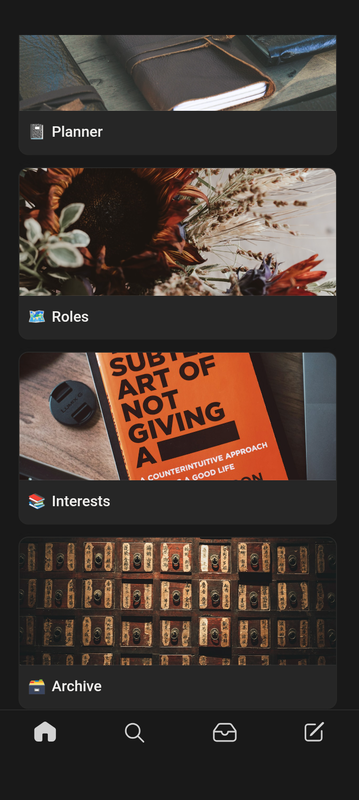
As I said, I use a hybrid setup as my planning system.
Above is a screenshot of my main Notion dashboard. It’s an adaptation of Tiago Forte’s “PARA Method” (projects, areas, resources, archive) – planner, roles, interests, & archive.
For me, I don’t have any projects that aren’t related to my “roles”, so that section is just my planner – mostly a calendar & running to do lists.
“Roles” are ongoing areas of my life – mostly health (physical & mental), homeschooling, zen BLITZ, & home stuff (shopping lists, budgeting & bills, etc). Each role has its own page with its own databases – for example, my physical health has my workouts so I can cycle through them, & mental health includes my daily journal!
“Interests” holds things that aren’t directly related to my roles – so, information about people, books, restaurants, etc.
And the archive is where things go to die cuz I’ll probably never need them…but maybe I will. 😅
Obviously, you don’t need to use PARA — this is just what works for me.
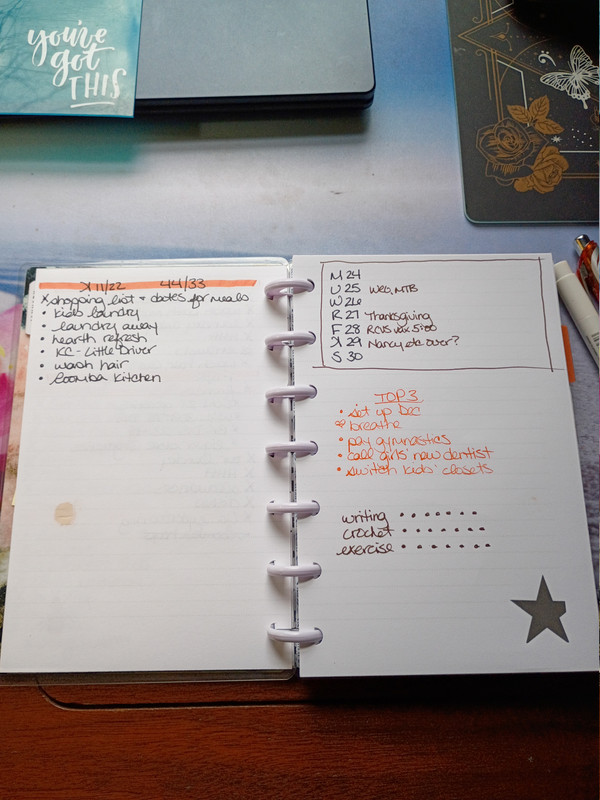
And this is my Happy Planner Mini. (Nevermind the Fruit Loops stain from my kiddo – that’s part of the charm of analog 😂)
In here, I have monthly calendars so I have a nice overview of things going on, weekly overviews, and daily stuff so I don’t have to look at my phone a zillion times a day.
Obviously, I print my own paper & don’t know how to format it properly for my dumbass printer, but that’s irrelevant. It’s cheap & customizable.
This satiates my desire for a proper “Bullet Journal”. For the most part.
Review
- Start with what matters and ignore everything else.
- Don’t force yourself into a planner that looks good but doesn’t work.
- You don’t need a brand-new system — you just need one that fits your actual life, right now.
- Planning is supposed to support you, not stress you out.
- Start small. Adjust as needed.
Start with what matters. Ignore the rest. If you like this vibe, hit ‘like,’ share it, and follow along — more rebellious simplicity coming soon.
Rock on! 🤘💚


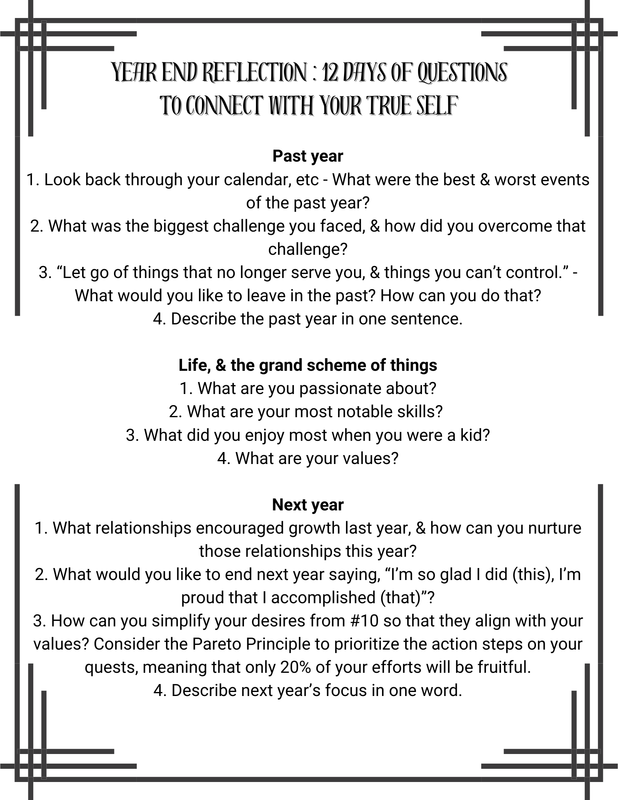
 zen BLITZ