Goal Setting Without the Bullshit: A Flexible 6-Step Guide (Any Time of Year)

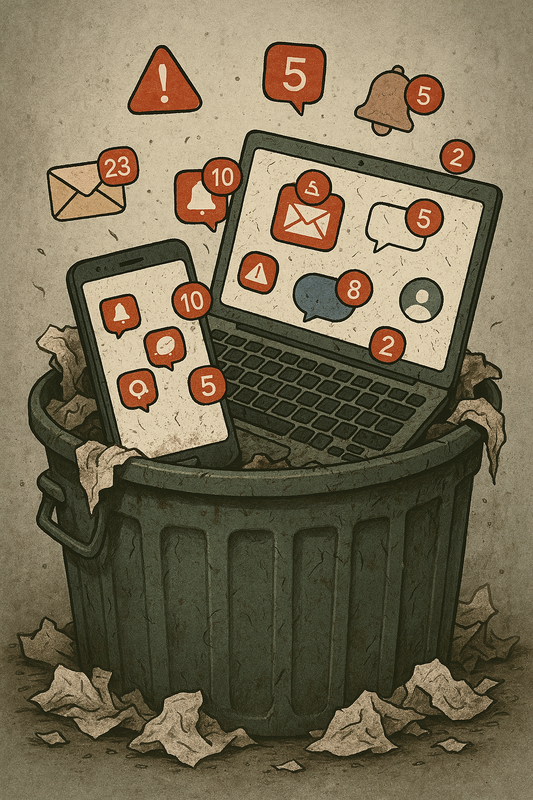
Image created with Copilot

“New year, new you!” You know that’s bullshit, on so many levels.

For one thing, pushing the reset button on the calendar year doesn’t change anything other than a number. People change over time — often quietly, unevenly, and without clean timelines – the dates don’t matter at all.

For another thing, there’s nothing wrong with you such that you need to completely “reinvent yourself” or whatever – Goals are intended for self respect, not self shaming or punishment for not being “good enough”. Everyone could benefit from improving their lives in certain ways, at certain times.

So, while I am writing this post for the new year, I’m going to share some reflections, practical steps, and a loving nudge for all of us to get our proverbial shits together whenever we need it, throughout the year.

Let’s be intentional about how we design our lives, shall we?


Step 1: Reflect Like You Mean It

(You might want to spread these reflection prompts out over a few days. Or weeks, whatever you need to do. 😉)

A. Role Review

Make a list of all of your roles in your life – whatever applies to you.

For example, mine are : myself, wife, mom, homeschool teacher, creator, & household manager.

It might seem like some of those things overlap, and they do because they’re collectively my life, but they’re also separate responsibilities.

What roles in your life carry their own responsibilities – are you a student? A volunteer? And even if your kids are adults, they still count, now just as much as ever.

Once you have your list, go through each role individually & ask yourself the following :

  • How do I feel about this area, as far as the associated responsibilities & the general vibe?
  • Why?
  • What, if anything, would I like to improve here?

No self judgment, just be honest.

If a role feels heavy or resentful, that’s information — not failure.

B. Define Your Ideal Life

Perfection isn’t reality.

Without that in mind, get wild with this one!

What, ideally, would make your life feel peak vibrant, authentic, & exhilarating? Spend a few minutes writing it out.

Make this personal: values-based, vision-based, aesthetic, emotional, or messy.

Dream big!

C. Optional Reflection Prompts

A few more things to ask yourself, if you’d like :

  • Where in my life am I proud of myself?
  • Where am I drained?
  • What’s one thing I’d change immediately if I could?

Step 2: Choose a Word of the Year

This doesn’t need to be too drawn out, and it doesn’t need to be for a whole calendar year.

Pick an anchor word to help you focus your efforts on for now – if it changes, change is good. Just pick one at a time, a truth to lean into for a while to serve as a compass & a reminder of the direction you’re going (which is forward 😉).

Examples I’ve used in the past : simplify, intent, & embody.

Write it somewhere you’ll see it regularly. Make a Canva design & hang it on your wall. Tattoo it on your arm if that’s your thing. Just don’t forget your reminder.


Step 3: The Brain Dump

Set a timer for at least five minutes and free write a list of anything on your mind. And, while you’re at it, everything.

No filtering, no performing as though it’s intended for anyone but you. Just get it all out of your head & onto paper.

Some loose categories to consider : Life + Work + Health + Wealth + Relationships. Maybe even consider some things from your “Fuck Yeah list” or childhood hobbies.

If your brain dump feels overwhelming, that’s the point — you’re emptying the clutter.


Step 4: Prioritize Intentionally

Go back through your brain dump and sort through it :

  • Hell Yes (non-negotiables or deeply aligned)
  • Maybe (park for later)
  • Hell No (things you’re carrying out of guilt or habit) – cross these right out

Then sort through the “Hell Yes” again, as well as your previous reflections – what things take priority for you, right now? What’s important to your wellbeing & sense of self? You really want to minimize this list as much as possible (no more than 2 or 3 things).


Step 5 : Identify the Why

For these priorities, ask yourself why those things matter to you.

Dig deep — the root motivation, the thing that will keep you going during slumps. Does it relate to your values, your identity, your direction in life?

Ask yourself – “If I lose motivation, what truth about this goal will get my ass in gear?”


Step 6: Build the Plan (Projects + Systems)

There are two main ways to execute on most goals – systems & projects.

Projects are time bound, outcome based goals with a definitive ending point. For example, planning a vacation or launching a product.

Systems are repeated behaviors, such as habits, routines, & processes. For example, I have my morning & evening routines, and our homeschool routine – all of these things include habits that better my life (& my kids), which is always the goal.

Pick no more than 1–3 major projects to work on or systems to develop to focus on this quarter.

An Optional Perspective : Experiments

If you have a bit more of a scientific mind, it may be helpful to view these new projects & systems as experiments.

  • Include:
    • Hypothesis
    • Test (action)
    • Evaluate
    • Implement or Pivot

“Experiments” remove failure-shame, because they’re just experiments. Try a thing, and if it doesn’t work, try something else.


Keep Yourself Accountable (Gently)

Some people like to tell their loved ones or an online community about their goals to help keep them accountable – they can keep those people updated on their progress.

While I kind of do that here on my blog a little bit, I prefer the visuals of habit tracking in my planners and reflecting regularly in my journals.

Whatever you do, choose something that feels supportive, not punishing if you don’t (or can’t) follow through.


Reflection + Adjustment

Reflection is key, especially if that’s your main accountability protocol.

Even if it’s not, you should definitely ask yourself regularly what’s working with your progress, what’s not working, and how you can make things better or easier for yourself.

For myself, I check off my habit tracker daily. Weekly, I review & see how the week went. And then monthly, I review my weekly reflections & see what I need to adjust.

Your timeframes & means of reflection may be different, but it’s essential to do if you want to see continuous improvements in life.


Real-Life Examples From My Current Goals

For nearly a year now, I’ve been focusing on a few things – my physical health, my writing & creativity, homeschooling, & my marriage. All of these things are major priorities for me for their own reasons, and that hasn’t changed.

For my health goals, I have a daily health log on Notion where I keep myself accountable for the food I eat throughout the days (I can be a bit of an “emo eater” sometimes). I keep a separate analog journal to log my weights & what exercise I do on a daily basis. Weekly, I review these logs & reflect on how I did in my analog journal. (And it’s been pretty neat seeing how my weights have changed over the course of months!)

I track what writing I get done daily in another analog notebook, and reflect on that each week as well. I never feel like I’m getting anything done, but my notebook reminds me that I do get stuff done & encourages me to keep at it!

We follow curricula for most of the girls’ homeschooling, and I’m constantly asking myself if we’re moving along at a reasonable pace. I adjust accordingly, and I keep track of progress on Notion, which makes it super easy when it comes to writing up quarterly reports!


Closing

You certainly don’t need a perfect plan to start, you just need to know where you want to go and what first steps to take on the journey.

One honest step is more powerful than a polished vision board.

Treat the coming year as an experiment in becoming more you, & let’s see where it takes us!


If you liked this post, please give it a “like”, share it with friends, and subscribe if you’re new.

If you’re comfortable, share your word of the season or one priority in the comments — I love seeing how people design their lives differently!

And if you’d like to watch a video I enjoyed that kind of plays in to what this article was about, check this out 👇

Rock on! 🤘💚

How to Choose the Right Planner for 2026 (Without Overcomplicating Your Life)

Image created with Gemini

It’s that time of year again – planner time!

With all the options out there, how do you know which one to choose? Do you even need a reinvented method?

You don’t need a “perfect system.” You need a system that actually fits your life.

Let’s try to figure that out…


Keep It Simple, Stupid. (KISS)

Some people tend to overbuild: too many trackers, too many spreads, too much pressure.

Why?

Sometimes it can be fun, but eventually you’ll likely burn yourself out.

The real red flag: you’re not using it OR it feels like it’s going to explode. Literally.

Focus on minimalism over aesthetic chaos, or too much “quantified self” data that you’ll realistically never give a shit about (ie: 12 mood trackers, tracking water intake by color, etc.)

Focus on what you actually need.


What You Really Need to Plan For

Grab a piece of paper or your journal – it’s list time!

What do you feel the need to plan for in the first place?

Everyone has universal categories :

  • Appointments & time-specific stuff
  • Goals / Habits

What else? For me personally, I also need to plan for :

  • Family adventures
  • Homeschool
  • Meal planning

Now ask yourself about each – Does this category make my life easier, or am I adding it because I feel like I should? Cross out the unnecessary & don’t worry about it!

The fewer categories you depend on, the longer the system lasts.


What To Do If Your System Feels Boring

Boring is fine. If it works, don’t fix it.

Consistency is boring. But boring is how you get results.

Overhaul cravings usually mean the current system never felt quite as effective as it needs to be. Ask yourself “why?”

Some small refresh ideas:

  • Simplify back to only the essentials
  • Switch up a layout
  • Add minimal decoration, color, or a theme
  • Reduce screens by intentionally using paper moments

Pre-Made Planner vs. Build-Your-Own

There are certainly benefits to both.

  • Pre-made = great for beginners, busy people, and those who hate setup.
  • DIY = great for people with unique schedules, neurodiverse brains, or flexible lifestyles.

Ask yourself : Do you want structure handed to you? Or do you want the freedom to build something more flexible?


Digital vs. Paper: Choosing Your Tools

Personally, I use both.

Notion strengths:

  • Holds everything.
  • Organizes long-term projects, archives, info-dumps, and complex systems.
  • Perfect for the behind-the-scenes life management.

Paper strengths:

  • Screen-free
  • Immediate
  • Great for daily/weekly overview
  • Helps cut down distractions
  • Good for grounding & simplicity

Hybrid = the best of both worlds.

Your planner doesn’t have to be one thing.


Avoiding Planning Fatigue

You don’t need January 1st to start fresh; you can start on any random Tuesday!

Consider your life as a collection of seasons, not years — winter rhythms vs. spring energy vs. summer chaos.

Adjust as life shifts.

(And don’t overdo it!)


My Personal Setup

1000000702.png

As I said, I use a hybrid setup as my planning system.

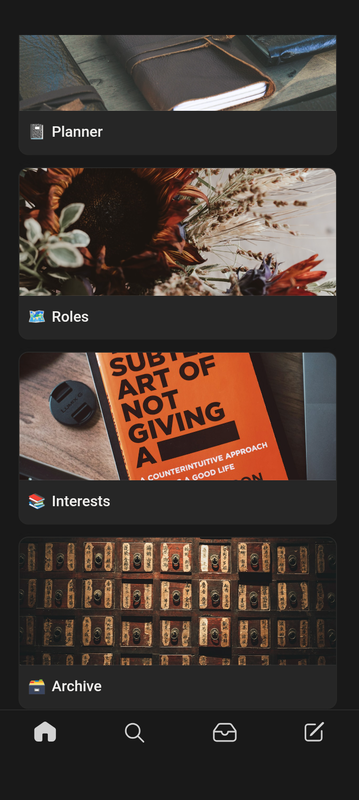
Above is a screenshot of my main Notion dashboard. It’s an adaptation of Tiago Forte’s “PARA Method” (projects, areas, resources, archive) – planner, roles, interests, & archive.

For me, I don’t have any projects that aren’t related to my “roles”, so that section is just my planner – mostly a calendar & running to do lists.

“Roles” are ongoing areas of my life – mostly health (physical & mental), homeschooling, zen BLITZ, & home stuff (shopping lists, budgeting & bills, etc). Each role has its own page with its own databases – for example, my physical health has my workouts so I can cycle through them, & mental health includes my daily journal!

“Interests” holds things that aren’t directly related to my roles – so, information about people, books, restaurants, etc.

And the archive is where things go to die cuz I’ll probably never need them…but maybe I will. 😅

Obviously, you don’t need to use PARA — this is just what works for me.

1000000703.jpg

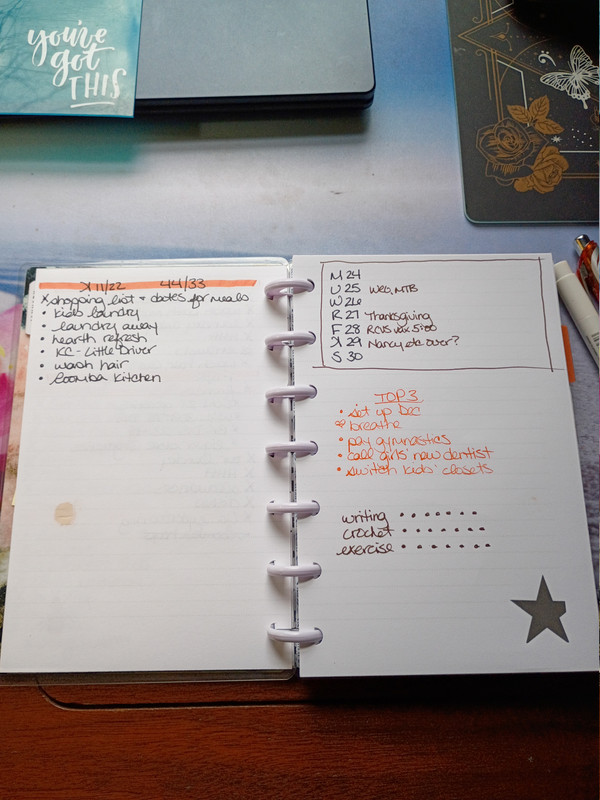
And this is my Happy Planner Mini. (Nevermind the Fruit Loops stain from my kiddo – that’s part of the charm of analog 😂)

In here, I have monthly calendars so I have a nice overview of things going on, weekly overviews, and daily stuff so I don’t have to look at my phone a zillion times a day.

Obviously, I print my own paper & don’t know how to format it properly for my dumbass printer, but that’s irrelevant. It’s cheap & customizable.

This satiates my desire for a proper “Bullet Journal”. For the most part.


Review

  • Start with what matters and ignore everything else.
  • Don’t force yourself into a planner that looks good but doesn’t work.
  • You don’t need a brand-new system — you just need one that fits your actual life, right now.
  • Planning is supposed to support you, not stress you out.
  • Start small. Adjust as needed.

Start with what matters. Ignore the rest. If you like this vibe, hit ‘like,’ share it, and follow along — more rebellious simplicity coming soon.

Rock on! 🤘💚

Always Tell Your Story: Why Sharing Your Truth Can Change Lives

Image created with Gemini

Why Your Story Matters

Everyone has a story worth telling. Even if you think yours is boring, messy, or not original – it is yours, and that makes it powerful.

The world’s drowning in noise, but human honesty still cuts through like feedback at a punk show – AI can’t create real emotion or lived experience, try as it might.


Nothing Is New — But You Are

Literally everything that can be said & done, has been. Nothing’s truly “original” anymore. And that’s ok!

What is unique is your lens — your collection of scars, triumphs, and weird little details. Nobody has ever experienced all the details put together that make up your story, which is a beautiful thing.

And every time you share one of your many truths, someone else out in the world feels a little less alone.


The Healing Power of Sharing

On my second day working the floor as a patient care assistant in an ER, I came across a patient who had ALS & his wife. He was nearing the end, and my job for the moment was to hold his hand & try to keep him calm while he was intubated. It was heartbreaking, knowing a little bit about what he’d been though, & was about to go through, and the same for his wife, because of my own experiences in a caregiver’s role with the disease.

His wife was devastated; she knew what was coming in the days ahead. So, I sat beside her and talked – I introduced myself, mentioned a little bit about my family history with ALS & the caregiver role I’d found myself in, and offered a friendly soul to help her with whatever she needed while in my department (”a warm blanket? Coffee? A hug? I’m not far; I’ve got you!”)

I was asked to help escort him to the ICU when he was deemed stable enough for transport. At the entrance, I was told I could go back to the ER & his wife was told to stay at the door until he was successfully transferred. Overwhelming grief consumed her, and understandably so. So I held her while she cried, gave her a compassionate little pep talk based on what I’d gone through, and stayed until she was invited in with her husband.

Point is, telling your stories can heal you and someone else. That day I saw that stories aren’t just meant to be told — they’re meant to be handed off like torches, sharing some light in moments of darkness.


Finding Your People

The ones who don’t get it will judge — they always have, always will. But honesty attracts the right people, the ones who’ve been waiting for someone like you to speak up.

“Your people” aren’t found through perfection — they’re found through realness. And the more you share your stories, the more your people will find you.


Boundaries and Bravery

All that said, here’s a quick note on discernment — not everything needs to be public, and oversharing can sometimes hurt more than help. It’s always best practice to keep your private information away from the internet altogether as much as possible, and you should never say anything that would hurt yourself or anyone else in any way. Of course, there are exceptions to these “rules”. Thus, discernment.

But don’t let the simple fear of judgment silence you. Everything you say could go either way — and that’s okay.

Bravery isn’t about ignoring fear; it’s about telling the truth anyway. If someone doesn’t like it & decides to troll? – FUCK ‘EM! They’re not you, and oftentimes those who lash out do so out of fear or the inability to understand. And that’s fine – you do you.


The Punk Rock of Humanity & Humility

In a world that’s increasingly artificial (AI, social media perfection, etc.), your realness is your rebellion.

Every time you tell your story honestly, you’re flipping off the illusion of perfection. (And all perfection is illusion!)

Celebrate your chaos, your cringe, your truth by sharing it with the world — it’s what makes you irreplaceable.

Write it, paint it, sing it, whisper it into the void. Someone out there needs to hear it — maybe even you.

If this spoke to you, share it with someone who’s been holding their story back – The world needs more real voices!

And if you want more unapologetic inspiration like this, hit “like,” subscribe, and keep telling your truth.

Stay real. Stay loud. And rock the fuck on. 💚🤘🏻

When Life Gets Chaotic, Prioritize Self Care

Image created with ChatGPT

I know I’ve vaguely mentioned some family chaos that’s occurred over the past few years – It settled down a bit earlier this year, & burnout from the whole situation set in for me.

I’m still burned out. And the chaos has reignited, in (not so) fun new ways.

So, what to do?!?

Focus on self care while plowing through the chaos- that’s all I can do.

Why Self Care Is Non-Negotiable

When you’re dealing with a bunch of shit in life, burnout is inevitable. You can push through all you want, but eventually you’re going to crash & burn.

It might not stop burnout, but it cushions the crash. In my experience, at least. (And I have more than my share of experience in this department, unfortunately.)

Of course, in the midst of true chaos, you probably don’t want to do anything. We all tend toward distraction in the forms of media or comfort foods, or whatever your unhelpful coping mechanism of choice may be.

That’s precisely when you need to shift your focus to self care – Make it just as much of a priority as the bullshit you’re dealing with. You need to maintain focus on your responsibilities, of course, but you also need to focus on your responsibilities to yourself.

Doing so will probably help with whatever emotional fuel is ruminating and adding to the dumpster fire of stress in your head.

When to Practice (Even When You’re Burned Out)

This depends on your situation, of course.

Mornings or evenings (or, ideally, both) seem to work for most people – Whenever you can find some peace to focus on your own wellbeing, if even just for short periods of time.

Figure out what times work best for you, and make an appointment with yourself – if not daily, as often as realistically possible. Even a weekly Do Nothing Day can go a long way!

What Self Care Can Look Like

It depends on you – what would fill your proverbial cup?

A pretty popular method recently has been the idea of a “dopamine menu”, where you list activities you can enjoy for various periods of time (5 minute “appetizers”, hour long “main dishes”, etc). Then when you find yourself with some free time, you choose something off your “menu” instead of doom scrolling or binging TV.

I don’t find myself with very much free time, to be honest.

But I do take time daily to focus on the core necessities of wellness : body, mind, heart, & soul.

  • Body : intentional physical movement
  • Mind : reading, learning, creating
  • Heart : socializing (if even just a quick text to someone I haven’t heard from in a while)
  • Soul : meditation, spending time outside

And this is where the Excitement Map also comes in handy – If you’re having trouble deciding which activities would soothe your soul in each of those categories, you may find some inspiration from yourself in the map (or “fuck yeah list”, whatever you’d like to call it. 😊)

When You Just Can’t Even

Some days, you’re not gonna meditate or stretch or write affirmations — you’re just trying to exist. And that’s fine. You’re not lazy; you’re overloaded. On those “ugh” days, just show yourself some grace and lower the bar. Drink some water. Get outside and take a few breaths of fresh air. Blast a song that reminds you you’re still alive. Do one tiny thing that says, “I’m still trying.” That’s enough.


I’d love to hear what your go-to self care habits are when life gets messy. Drop them in the comments — I’m sure we could all use some ideas!

If you liked this post, please give it a “like”, share it with friends, and subscribe if you’re new.

Rock on! 🤘🏻💚

Do Nothing, Stay Sane: Simple Retreats You Can Take Anytime

Legit, this is hanging in my kitchen

Last year, I shared a post about the idea of a “Do Nothing Day”, & it seemed like quite a few people found the concept pretty interesting. So, I thought I’d reintroduce it with a couple of tweaks!

What is a “Do Nothing Day”?

It’s a date you make with yourself where you do nothing. Almost literally.

For example, I spend all week homeschooling, running kids to extracurriculars, writing, cooking, cleaning, doing laundry, and on and on…

On “Do Nothing Day”, I’m not having any of that nonsense!

The dishes & laundry can wait. The kids can entertain & educate themselves a bit. And there’s enough food in the freezer, pantry, & leftovers in the fridge that I shouldn’t have to cook, and nobody’s gonna starve.

I clean my house every day, and still have to clean my house every day. Except “Do Nothing Day”. Cuz…fuck that shit.

It’s perfectly reasonable to take time for your own sanity before you run yourself into burnout city. “You can’t fill others’ from an empty cup” they say; and you can’t run a car on fumes for very long before it causes you even more problems. I’ve “powered through” so much crap in my life, I know how it can sneak up on you.

When to “Do Nothing”

I prefer to take Sundays as my “Do Nothing Day”. Not for religious reasons; I just figure most people don’t like to do things on Sundays, so there aren’t usually any parties or events to interrupt my plans.

Whatever day works best for you is up to you!

How to “Do Nothing”

Honestly, these days I call it my “Fuck All Day”; for my kids, it’s “Whatever Day”.

I only try to do things that bring me peace. If that includes doing laundry, so be it. If it includes writing in my journal all day, that’s perfectly fine too.

My diet & exercise routines go out the window. I still do some yoga & tai chi, but I also eat all the carbs. My usually pitch black coffee is infused with pumpkin spice creamer (the only pumpkin spice I like!) and Trader Vic’s Macadamia Nut Liqueur; my breakfast is my ultimate comfort food- Chicken Flavor Maruchan Instant Lunch. 😋 And if there’s leftover chicken wings or pasta salad in the fridge, bet your ass I’m shoveling it in my face!

I reflect on the past week in my journal, and decorate the pages with washi tape, stickers, & photos.

Hubby usually throws something crazy together for dinner (or he just makes steak – what an angel! 😊), and he does the dishes. Or he doesn’t; I don’t really care either way.

And as I said, it’s “Whatever Day” for the kids. I always make them drink some water and eat fruit & protein for breakfast – if they finish that & want more, then they can have cereal or Toaster Strudel or whatever. On “Whatever Day”, they can have pizza & juice for breakfast for all I care.

I usually limit their screen time quite a bit too. But not on “Whatever Day”! Wanna watch videos of adults with too much time on their hands play Minecraft all day? Whatever! (Why?!? Why do people enjoy watching other people play video games, instead of playing the games themselves?!? I’m just too old to understand…)

Solo Retreats & Staycations

You could always take it to the next level if you wanted to (or if you don’t have time to carve out weekly) – schedule a “solo retreat” or “staycation”!

I actually read a little book about “Solo Retreats” that was published during the pandemic, which was cute. The book suggested bringing as many of the elements of a “retreat” to your home! I guess it depends on what kind of “retreat” you’re looking for, but it could include a schedule with meditation, yoga, journaling, indulging in hobbies, a fulfilling menu, maybe some fun drinks, candles, a bath, a bonfire… What would you do on a retreat?

Same with “staycations”. What would you do on a vacation that you could do in your own neighborhood? Odds are good that you wouldn’t have to drive far to find historic spots, museums, new boutiques, or restaurants you’ve never tried. Companies make Capri Sun-esque pouches of wine & margaritas that you could take to a lakeshore beach, y’know?


So schedule some time for sanity maintenance – whether a weekly “Do Nothing Day”, a monthly “Solo Retreat”, or an occasional “Staycation” – a little break from routine can go a long way!!

👉 If this gave you ideas, try scheduling your own Do Nothing Day this week. Then come back and tell me how it went!

Rock on!

Reignite Your Childhood Hobbies: How Play Can Spark Joy in Adulthood

Imaged created with Gemini

What did you love to do as a kid? And why the hell did you stop?

Oh yeah, work. And family. And life got in the way.

By the time you finally get a few moments, you’re too wiped out to do more than scroll or crash in front of Netflix.

But is that leaving you feeling fulfilled at the end of the day? Probably not.

So here’s an invitation to consider reigniting some of your youthful passions and bring some spark back into your life, at least a couple days a week!

The Compass of Childhood Joy

Whatever lit you up as a kid or a teenager might still give you clues as to what would make you happy as an adult.

It doesn’t matter if they were solo hobbies like writing & reading or active hobbies like skateboarding & playing sports – don’t you think those things might still bring you joy today?

And what do these kinds of activities say about who you were, and still are?

Literal Play vs. Adult Adaptation

Of course, not every childhood hobby fits neatly into adulthood.

If you liked pretending you were a superhero or building blanket forts, those are great ways to bond with your own kids or nieces & nephews. Or just playing by yourself, I’m not here to judge! – You could create a cozy reading nook instead of a blanket fort, or become an EMT instead of pretending to be a superhero!

Most childhood hobbies can be adapted in some way to your adult life. Pretend games can turn into fabulous fiction books, and climbing trees can look like hiking or mountain climbing.

The possibilities are endless! The point is that play matters throughout your life, regardless of whether it’s literal or adapted.

Nostalgia as Medicine

Returning to old hobbies isn’t just fun — it’s healing! You’re reclaiming pieces of yourself that were left behind.

Nostalgia can be a form of self-care (for example: adult coloring books, roller skating comebacks, LEGOs for grown-ups).

Passion First, Profit Second

Some hobbies can even evolve into businesses and “side hustles”, but you need to be aware of your passion levels throughout – monetizing too soon can kill the joy, & if it’s not fun, why do it?!?

Writing has always been a thread in my life. As a kid, I made weekly comics for my classmates. That grew into short stories, then poetry, then even some (slightly rebellious) light erotic fiction. For a while, life got in the way and I stopped — but when I sat down to write a little book on goal setting, I remembered how much fun it was. Since then, writing has evolved into blogging, poetry, fiction, and whatever else sparks me in the moment. No profit yet — maybe someday — but the real win is that I found the joy again.

My friend Josh is the perfect example. In high school, his passion was playing guitar. But when it came time for college, he chose engineering — something he was good at, but didn’t love — because it promised steady money. Still, he found ways to keep music alive, freelancing as a guitar teacher and joining a band. When the pandemic hit, he leaned on engineering and made solid money designing blueprints, but he hated every minute of it. As soon as restrictions lifted, he dropped the job and went back to teaching guitar and playing shows. Now he makes a living doing what he loves, and I couldn’t be prouder. 😊

Hobbies as a Shortcut to Excitement

Remember my Excitement Map post?

Are any of your childhood hobbies on there? Should they be?

They might be a gateway to the “Fuck Yeah” zone! 😜

Journaling Prompts

Want to go deeper? Grab your journal and play with these questions. Sometimes the answer to ‘What lights me up?’ is already sitting in the toy box you left behind…

  • What were my top 3 favorite hobbies as a kid? What feelings did each give me?
  • If I had one whole Saturday with zero responsibilities, which of those hobbies would I instinctively do first?
  • Are there ways to adapt my old hobbies into adult life? (Ex: blanket forts → interior design or cozy home rituals; rollerblading → dance or hiking…or even roller derby!; pretend games → creative writing).
  • Which of my hobbies still sneak into my life now, even in small ways?
  • What does this say about who I am — then and now?
  • How could I reclaim even one hour a week for something I loved as a child?
  • What hobby could I share with my kids, friends, or partner as a way of reconnecting with play?
  • Do I feel pressure to monetize my hobbies? If so, how would it feel to let them only be for joy again?
  • What piece of myself do I think I’ll “get back” by doing this hobby again?

It’s never too late to pick up the sketchbook, the rollerblades, the guitar.

Try one this week. Play, create, explore — then come back and let me know how it felt.

See if it still makes you “fuck yeah”!

If you liked this post, please give it a “like”, share it with friends, and subscribe if you’re new.

Rock on!

Shifting Perspectives: A More Useful Way to Look at Life

Image created with Gemini

Sometimes, the way we view our circumstances can either propel us forward or hold us back. It’s not about dismissing how we truly feel but about finding a perspective that’s more useful, more productive, and ultimately more empowering.

The Power of Perspective

Life is rarely black and white. The same situation can feel overwhelming or manageable, depending on the lens through which we view it. For example, a setback at work might initially feel like a failure, but shifting your perspective can reveal it as an opportunity to learn, grow, or even pivot in a new direction.

The key is to acknowledge your emotions without letting them dictate your entire outlook. It’s okay to feel frustrated, disappointed, or even stuck. But once you’ve processed those feelings, ask yourself: Is there another way to look at this?

When my ex left after nearly 11 years, I was understandably devastated for a week or so – Then I realized that, while we were meant to be together for a time, we’d definitely pushed it beyond its “best by date”.

Why Perspective Matters

Perspective shapes our reality. When we’re stuck in a negative mindset, it’s easy to spiral into self-doubt or inaction. But when we consciously choose to reframe our thoughts, we open ourselves up to new possibilities.

For instance, instead of thinking, “I’ll never get this right,” try, “This is challenging, but I’m learning something valuable.” This subtle shift doesn’t erase the difficulty of the situation, but it does make it feel more manageable.

I’ve been learning about shifting perspectives in unexpected ways — sometimes through everyday moments with my step-daughter, and sometimes through heartbreak I’ll never fully understand. With both, I’m reminded that while I can’t control how the story ends, I can choose what lessons I carry forward.

How to Shift Your Perspective

  1. Acknowledge Your Feelings Start by recognizing how you truly feel. Suppressing emotions only makes them harder to process.
  2. Ask Reflective Questions What’s another way to look at this situation? What’s the lesson here? How can I grow from this?
  3. Focus on What You Can Control Instead of fixating on what’s out of your hands, direct your energy toward actionable steps.
  4. Practice Gratitude Even in tough times, there’s usually something to be grateful for. Shifting your focus to these positives can help balance your perspective.

The Balance Between Honesty and Optimism

Shifting your perspective doesn’t mean ignoring reality or pretending everything is fine. It’s about finding a balance between honesty and optimism. You can acknowledge the challenges while still looking for ways to move forward.

For example, if you’re feeling stuck in your career, you might say, “I’m not where I want to be, but I have the skills and determination to get there.” This approach validates your current experience while keeping the door open for progress.

Final Thoughts

Life is full of ups and downs, and how we choose to view those moments can make all the difference. By shifting your perspective, you’re not undermining your feelings—you’re giving yourself the tools to navigate them more effectively.

So the next time you’re faced with a challenge, take a moment to step back and ask yourself: Is there a more useful way to look at this? You might be surprised at how much of a difference it can make.

I don’t always get this right — sometimes rumination still spirals into negativity — but reminding myself to ask, ‘Is there another way to look at this?’ has pulled me out of so many mental ruts.


Thanks for reading! If this resonated with you, feel free to share it with someone who might need a little perspective shift today.

👉 What perspective shift has changed YOUR life? Drop it in the comments — your story might be exactly what someone else needs today.

Rock on!

Find Your Spark: My ‘Fuck Yeah’ Version of the Excitement Map

Image created with Gemini

I recently watched a video by Tiago Forte about what he calls “The Excitement Map”.

He suggests using it to figure out what goals to go after, because focusing on what excites you naturally boosts life satisfaction.

I like it because it reminds me how much of life can be exciting when I’m feeling pretty “blah”.

How To Make One

He used a “mind map” layout for his, with “life” at the center and branches extending from there.

I just made lists. And I’m calling it my “Fuck Yeah List”, because these are things you should always say “fuck yeah!” to. 😆

Basically, you just make a list (or branches) of things that energize & fascinate you. Don’t get too specific to start, just general categories or subjects of interest – whatever “lights you up”. He suggests browsing through your digital life for ideas (such as videos & articles you’ve saved, observations throughout the day, etc). A good question to ask yourself to help add to the list is “What did you enjoy doing as a kid? No judgment, no guilt tripping yourself with what you think should be on there – just the things that genuinely spark something in your soul. Tiago even goes so far as to say that these should be things you feel you have a physical, visceral passion for.

From there, you’d get more specific – ask yourself & write down what about each topic makes it important or meaningful or exciting for you.

Now you have something to work with however you see useful. ❤️

My “Fuck Yeah List”

I expected myself to struggle with making my own list because I’ve been feeling pretty “blah” lately (distracted, overwhelmed, worried — you know, all the fun mental clutter.)

But once I got going on it, it really came together nicely! So here’s what I came up with :

  • Writing
    • Sharing things that excite / interest me
    • Feeling proud of something I’ve written
  • Nature
    • Seeing things I don’t see very often (certain birds, butterflies, ruins)
    • Fresh air, refreshing breeze
    • Flowing water
  • Adventures
    • Experiencing different places & things
    • Shopping
    • Hiking
    • Events
  • Music
    • Concerts
    • Dancing
  • Witchcraft
    • Nature
    • Meditation
    • Protection
  • Learning
    • Psychology
    • Stoicism
    • Buddhism
    • Health
    • Neurology
  • Exercise
    • Getting stronger, leaner, faster
    • Dancing, coordination
  • Cooking
    • Putting together healthy, delicious dinners for my loved ones
  • Notion
    • Creating engaging, functional workspaces for different purposes
  • Driving
    • Cruising around at night, no one else on the road, listening to music with the windows wide open
    • Going 70+ on the highway, legally

If you’ve been feeling flat lately, this is a game-changer. Make your own Excitement Map and see what lights you up. Share this post if you think someone else needs the reminder.

Rock on!

Weight Loss Without Misery: What Worked for Me (So Far)

I’ve lost over 15 pounds! 😁👍

That’s halfway to my goal!! 🥳

Ever since my doctor told me my cholesterol was “elevated” (though, as I’ve been told by everyone else, “whose isn’t?!?”), I made an honest effort to make some changes to my health.

My main goal is to feel better, however. A better mindset has been the most rewarding side effect of all the dieting & exercise I’ve been doing the past couple months – weight loss & toned muscles are just a bonus.

Let’s review my efforts so far…

Diet

I’ve been following a “mindful eating” diet plan set up with the help of ChatGPT. It helped me set up a schedule so that I wouldn’t get too hungry by dinnertime (& thus shovel a bunch of food in my face).

Here’s what that looks like :

Mindful Eating Schedule

  • 10:00 – lemon / lime water
  • 11:00 – fruit
  • 1:30 – salad w/ protein
  • 4:00 – smoothie / yogurt
  • 6:30 – veggies with hummus
  • 8:00 – dinner
  • 11:30 – dark chocolate & nuts
  • 1:00 – fruit

I don’t follow this strictly, but it’s been proving to be pretty good guidelines for me. I’m trying to focus on eating mostly veggies & protein. Through ideas from Tim Ferriss’ slow carb diet, part of my weekly “do nothing day” includes “going crazy” (which has definitely helped me keep my sanity!) And on days when we find ourselves on an adventure, I just try to stay mindful of what I order out (without depriving myself of the glorious BBQ of summer!)

I’ve also been counting calories using an app called “My Net Diary”. It makes sense to take in fewer calories than you burn off throughout each day, so it’s been making me more aware of what I’m eating. And I love it!

“Don’t drink calories” has been a big realization for me – I didn’t realize how ridiculous my coffee creamer was! (Bet your ass I’ve got a generous amount of it plus a shot of Trader Vic’s macadamia nut liqueur in there on “go crazy day” though! 😋)

Exercise

I forgot how much I love to exercise!

I started with just 5 minutes a day, and have built myself up to about 45 minutes (give or take).

I do different things daily, all movements that I love (which is key to maintaining the routine!) :

  • 20min cardio / dance
  • 15min arms / bellydancing
  • 10min yoga / tai chi / qi gong

I’ve always been interested in belly dancing, and now that I’ve been doing YouTube videos regularly, I’m seriously considering signing up for a local belly dancing group. (How I would love to create & perform a routine to some ska & rockabilly – The thought of complementing “King For A Day” with the chimes of a bellydancing belt is just too adorable! 😊)

On “go crazy” days, I stick to just yoga, tai chi, and qi gong. And definitely not for 45 minutes!

I realized I have a bit of trouble with tai chi & qi gong because I’ve been practicing yoga for over 20 years. Yoga is about releasing energy and gradually improving flexibility, balance, & strength; where tai chi & qi gong are more about energy movement & manipulation, and range of motion. The movements in yoga tend to be more “grandiose” than those with tai chi, so I struggle to slow down and flow with the “chi”. But both types of movements have their appropriate times.

Smoking…..

Well…heh…oops! 😬

(I’m such an asshole……)

I quit smoking over 6 years ago, when I was pregnant with my oldest. However, I vaped until a couple of months ago when I’d lowered the nicotine level in my vape so low that I realized it was all psychological habit instead of addiction. So I quit.

I kept a pack of Camels around that I’d smoke maybe one or two a year if shit hit the fan & I needed a little nihilism.

Well, I needed a little nihilism amidst my recent “mid-life crisis”, & now I’m smoking more than I’d like to admit.

I gotta quit. Again.

It’s honestly kinda low on my list of concerns, though, to be honest. (A post on that soon…probably.)

I’ve really been enjoying sneaking off to the nooks & crannies of my yard to see whatever nature I can while I’m out there though – hummingbirds, butterflies, chipmunks, & squirrels throwing crabapples at me.

Health Log on Notion

I’ve been using Notion to help me keep track of everything (as always).

I have a database with a template set up to reset daily.

In the properties, I track how many fruits & veggies I eat each day, water, exercise types, calories, steps, cigs, and some other stuff.

The note itself contains my “mindful eating schedule”, a food log, exercise log, and space for reflections (I realized during yoga yesterday how cranky my knees have gotten omg!)

This is making it super easy to not only stay mindful throughout the day but also reflect & pivot as needed each week!

Lessons I’ve Learned

  • Diet is the most important thing to focus on if you want to lose weight. You can exercise all you want, but if you’re shoveling candy & chips in your face all day, you won’t make any progress.
  • Exercise is important for overall health. Not just mental & physical vitality, but also to tone up your muscles. So move your ass – You’ll lose weight a lot quicker!
  • Start small & build up to where you feel like you need to be. I slowly reduced my calorie “allowances” and started with 5 minutes of exercise (building gradually each week).
  • Do things you enjoy. I like the foods I eat on my schedule, & they make me feel good. I love dance cardio & belly dancing. If I tried jogging daily, it wouldn’t last long (I’ve tried, & it didn’t.) Do whatever keeps you interested.

I’ve still got a long way to go, but I’m damn proud of how far I’ve come. If you’re working on your own health journey — remember, baby steps and curiosity go a long way. You’ve got this.

Have you started (or restarted) a health habit lately? Tell me about it — I’d love to hear.

If you liked this post, please give it a “like”, share it with friends, and subscribe if you’re new.

Rock on!